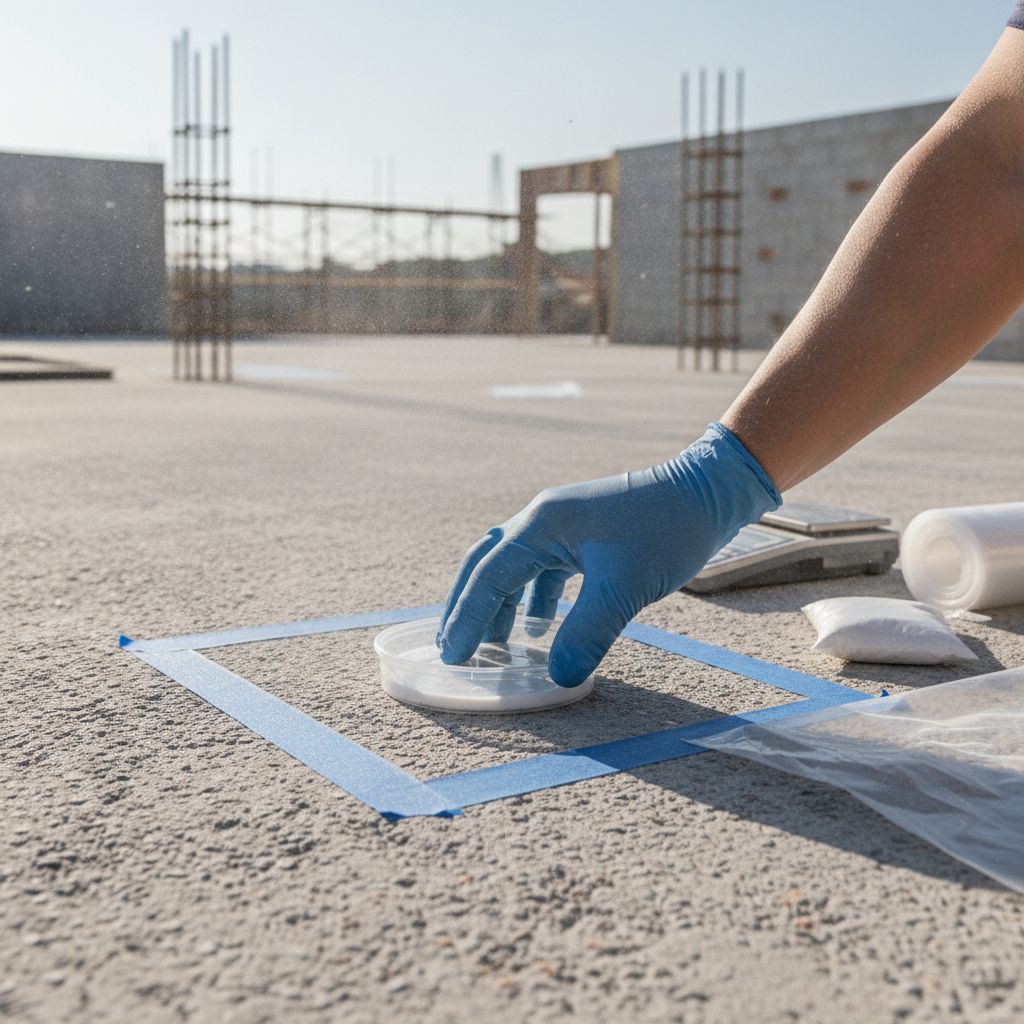
It surprises most people, but a dry, high-desert climate doesn't rule out slab moisture failure. The Mesilla Valley is an irrigated agricultural floodplain of the Rio Grande — and slabs near irrigation canals, farmland, or simply closer to the valley's naturally higher water table can still see moisture vapor drive up through concrete and cause a coating to blister, delaminate, or fail to adhere.
Moisture vapor transmission isn't just a function of rainfall — it's a function of what's underneath and around the slab. Irrigation-canal seepage, agricultural runoff, and a genuinely high water table near the Rio Grande floodplain can push moisture up through a slab regardless of how dry the air above it is.
We run calcium chloride and relative-humidity moisture testing on every slab before quoting a coating system — not just for slabs with an obvious history of moisture issues. Readings that come back elevated call for a vapor-barrier primer system rated for high-moisture-vapor-emission slabs before any topcoat goes down.
Coating over a slab with elevated moisture vapor emission without a barrier system is one of the most common causes of early coating failure — blistering, bubbling, or full delamination within months rather than years.
Las Cruces Polyurea tests every slab before recommending a system, whether it's a residential garage, an ag-processing facility near irrigated fields, or a new-construction pour — because a coating is only as good as what's underneath it.
No obligation. We'll assess your space and give you a real number.