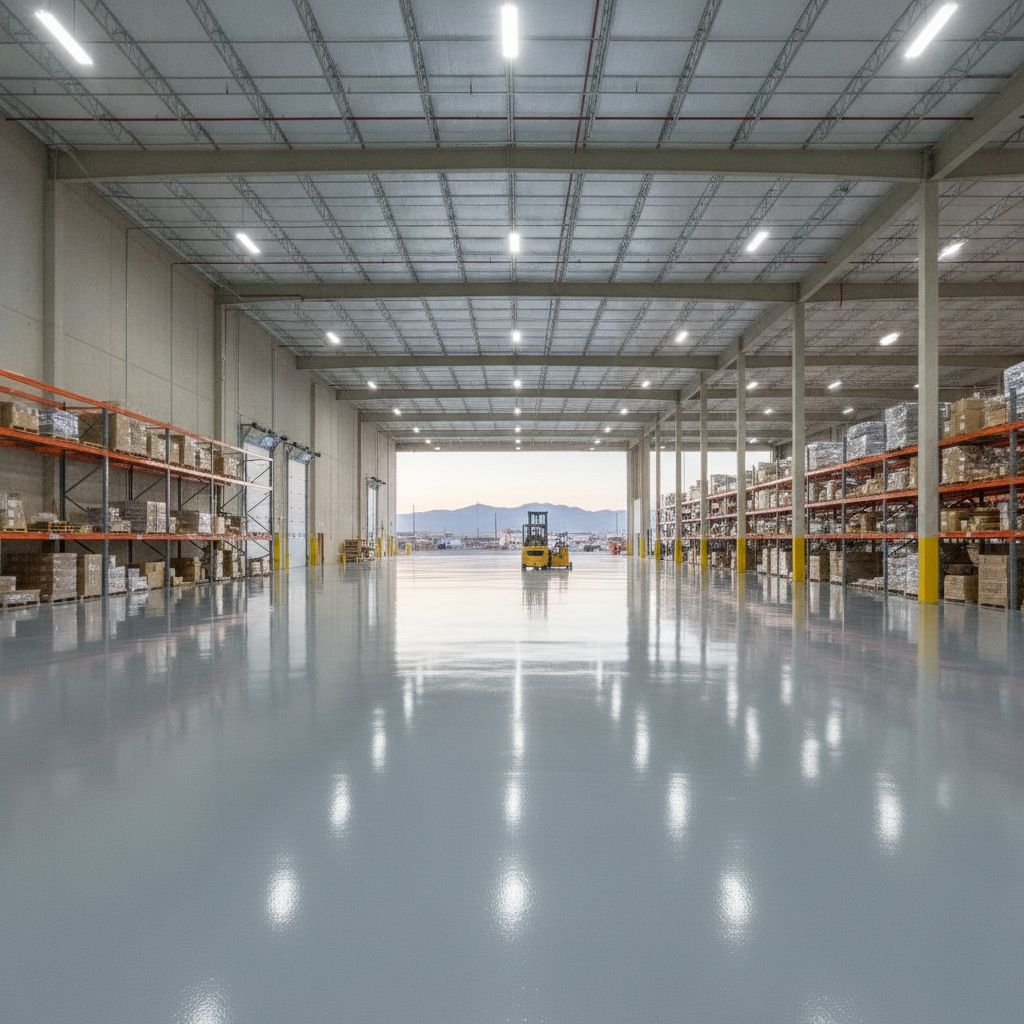
Pecan and chile packing are two of the Mesilla Valley's defining agricultural industries, and both put processing- and cold-storage-facility floors through conditions most commercial coatings weren't designed for: daily washdown cycles, sustained moisture exposure, temperature-controlled storage, and routine contact with organic acids and cleaning chemicals.
Standard epoxy or sealed-concrete floors can hold up fine in a dry warehouse, but daily washdown and chemical exposure common to packing and processing lines break down that same coating far faster — leading to pitting, delamination, and bacterial harborage points in seams and cracks.
Polyurea and polyaspartic systems are applied seamlessly, eliminating the grout lines and seams where moisture and chemicals infiltrate a substrate. The topcoat chemistry is specified against your facility's actual chemical exposure list — cleaning agents, organic acids from processing, and repeated washdown — rather than a generic industrial default.
Cold-storage floors add thermal cycling to the exposure profile — repeated warm-to-cold transitions that can crack a brittle coating over time. Polyurea's flexibility helps it handle that cycling better than a rigid epoxy system.
Las Cruces Polyurea scopes ag-processing and packing facility floors individually, around your actual washdown schedule and chemical exposure — including scheduling installs around harvest-season downtime windows where needed.
No obligation. We'll assess your space and give you a real number.